What do you think about school districts allowing excused absences due to mental health?

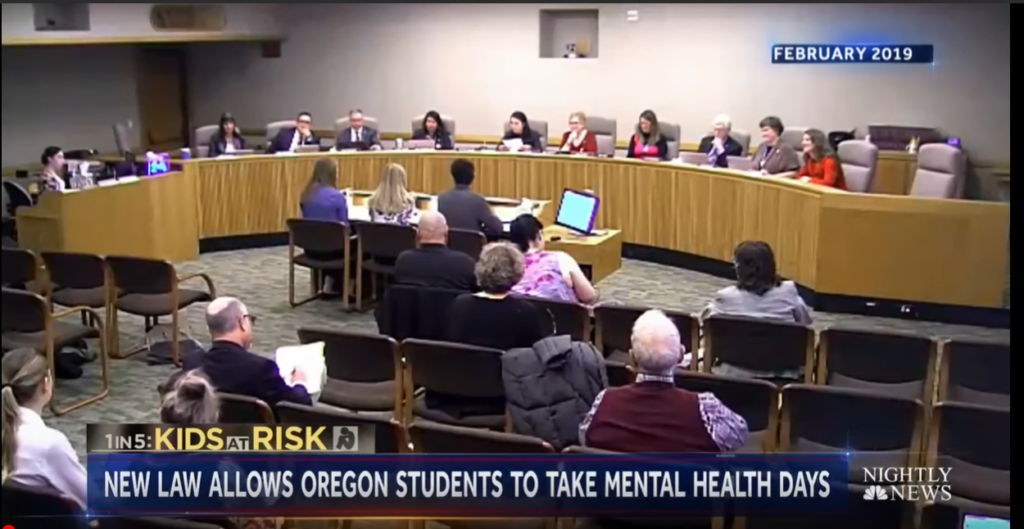
Oregon, Minnesota, and Utah have passed laws allowing excused school absences for mental health. Both New York (NY Bill S6687) and New Jersey (NJ Bill 5780/S4122) are in the process of considering similar bills.

I was pretty excited when I first heard about these bills. On one hand; this will help to reduce the stigma of mental illness by giving it the same credence as physical illnesses. 

It could also allow a child in distress to see a mental health professional quickly, since school hour appointments may be easier to secure. Also, it can alert the school about a particular child who may be struggling, that they had not previously known about. Allowing the school to offer help with interventions and support. 

But I was quickly reminded by leading psychologists Dr.Anne Marie Albano, who is a well-known school refusal researcher and Dr. Shane Owens  who specializes in helping emerging adults and parents, that this may not be helpful in the case of school refusal. Kids dealing with school refusal are avoiding something that is causing them distress. Research consistently shows that the more kids avoid school, the harder it is to get them back to school. Avoidance is a negative coping mechanism that works to their detriment. If a parent knows their child can be excused, they may not persist in their demands to get their kid to school that day, thus perpetuating their avoidance.

At face value, these laws seem like a good idea, but for school refusal kids it may have the opposite effect.

What do you think? And if there are any Oregon, Minnesota or Utah parents reading this, we would love to hear how this has affected you.

Jayne Demsky

SchoolRefusalHope.org Twitter @SchoolRefusalUS

You may also like

School-Based Intervention Teams, School Avoidance, School Refusal, and Truancy

When a child begins missing school consistently, families often hear a mix of terms—school avoidance, school refusal, and truancy. These words are sometimes used interchangeably, yet they describe very different realities. Understanding these distinctions is essential, not only for parents, but for schools tasked with responding appropriately.

More Than a Tardy Slip: Georgia’s SB 123 Marks a Turning Point in School Attendance and Why School Avoidance Training Is the Missing Link

More Than a Tardy Slip: Georgia’s SB 123 Marks a Turning Point in School Attendance and Why School Avoidance Training Is the Missing Link

Georgia’s new attendance law, SB 123, is here, and it’s a major shift. No longer can schools expel students solely for absenteeism. Instead, the law, effective July 1, 2025, mandates a deeper look at the root causes of why students are missing school.

This article explores why SB 123 is a critical opportunity, not a compliance burden. It’s a chance to move from punishment to empathy. But to succeed, schools must address one critical, often-overlooked piece of the puzzle: “school avoidance.” Discover why training staff to recognize and support emotionally-based absenteeism is the key to unlocking the true, positive potential of this new law.

How to understand and manage school attendance, truancy, and the 90% rule when your child has health-related absences. Quick Summary / Hook: For Texas families of children with disabilities or chronic health needs, frequent school absences are often unavoidable. However, Texas law has strict rules about attendance, including the 90% attendance rule and truancy laws that may impact class credit and graduation. This guide explains those rules in depth and offers practical strategies for staying in compliance, protecting your child’s rights, and building strong partnerships with your child’s school.

Navigating Texas Attendance Laws for Students with Disabilities and Health Needs

For Texas families of children with disabilities or chronic health needs, frequent school absences are often unavoidable. However, Texas law has strict rules about attendance, including the 90% attendance rule and truancy laws that may impact class credit and graduation. This guide explains those rules in depth and offers practical strategies for staying in compliance, protecting your child’s rights, and building strong partnerships with your child’s school.

Get Help Today with
Exclusive Access to Leading
School Avoidance Experts

Unfortunately only a small percentage of school professionals, therapists, educational advocates and policy makers understand school avoidance best practices. So, you must become the expert to ensure your child is getting:

  • Appropriate mental health treatment
  • School assistance without punitive responses (truancy, failing, grade retention)
  • Educated regardless of their school avoidance
  • A 504 plan or IEP if needed (many school avoidant kids qualify)

The time passing slowly without progress is the worst feeling. It wouldn’t have taken five years of suffering and uncertainty if I had this expert guidance during my son’s school avoidance. We would have saved $29,000 in lawyer fees and $69,000 for private schools.

Providing Information School Avoidance Families Need To Know

This Guide explains; 504 Plans, IEPs, Attendance Policies & More

We Use Cookies

We use cookies to make your experience on this website better.